
Music as Part of Church Life
Temple Emanu-El was founded in 1845 by 37 Jewish immigrants. Just one year later, musically gifted members of the congregation came together to form a choir. Their voices served not only to enhance the solemnity of the services: the choir also offered members a special opportunity to actively participate in religious and community life.
As the congregation turned toward Reform Judaism, the liturgy and worship services also changed. In addition to Hebrew, German was initially introduced, followed later by English. In 1848, an organ was installed—at that time a visible and audible symbol of liturgical renewal. Choral and instrumental music became defining elements of the worship services at Temple Emanu-El.
From an amateur choir to a professional ensemble
Over the decades, the original choir of dedicated parishioners evolved into a professional ensemble. In 1903, it consisted of 22 trained singers: six sopranos, six altos, five tenors, and five basses.
An article in the New York Tribune from that same year lists the names of all 22 performers. Particularly revealing is the mention of six women. Their documented participation provides important insight into the role of women as professional musicians at Temple Emanu-El in the early 20th century.
The Tradition of Cantors
The congregation’s cantorate developed in parallel with the choir. Over the generations, numerous cantors shaped the musical and liturgical identity of Emanu-El. Among them were G. N. Cohn, Adolph Rubin, William Sparger, Simon Schlager, Moshe Rudinow, Arthur Wolfson, Howard Nevison, Lori Corrsin, and Lance Rhodes. Today, Mo Glazman carries on this important tradition.
Each of them brought their own musical ideas, experiences, and forms of expression to community life. Together, they embody a vibrant blend of traditional Jewish liturgy, musical renewal, and contemporary community life.
A Story Told Through Spaces and Voices
The congregation’s growth is also reflected in its places of worship. Its history began in a simple attic on the Lower East Side. This was followed by more imposing synagogue buildings, until Temple Emanu-El finally moved to its current location at Fifth Avenue and East 65th Street.
From the anonymous singers of 1846 to the musicians and cantors of today, the musical tradition of Temple Emanu-El has evolved, one voice at a time. To this day, it bridges the past and the present—and makes music a vibrant center of the congregation.
Cantor Mo Glazman
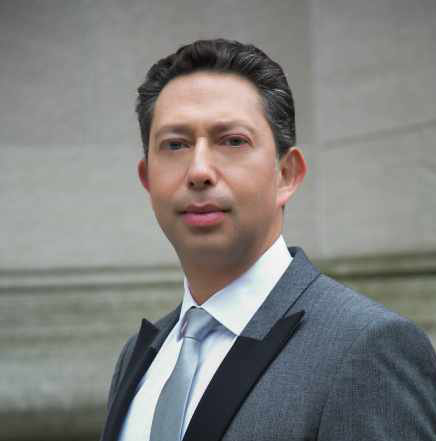
Hailed by *New York Jewish Life* as a “wonderful tenor and star attraction,” Cantor Mo Glazman has performed in Europe, Israel, and North America. His concerts have taken him to venues including Carnegie Hall, David Geffen Hall, the National Opera Center, the Saint James Theatre, and Studio 54.
His repertoire blends cantorial music with classical, Broadway, folk, and soul. In addition to several recordings, he released the solo album *Soul on the Seventh Day*, a Motown-inspired prayer experience he calls “Jewish Soul.” As the producer and singer of the album *One Voice*, he brought together three Jewish musical traditions. Most recently, he directed *Shabbat on Broadway*, a highly acclaimed Shabbat service at the Saint James Theatre that sold out within a few days.
Colin Fowler – Music Director

Colin Fowler began his musical training at the age of five in Kansas City. After studying at the Interlochen Arts Academy, he earned bachelor’s and master’s degrees in piano and organ from The Juilliard School.
As a versatile musician and conductor, he has been involved in numerous Broadway productions, including *Wicked* and *Jersey Boys*. He has taught at New York University and Nyack College and served as music director of the Mark Morris Dance Group. His performances have taken him from Carnegie Hall to the Sydney Opera House. In addition, he has led services at prominent New York congregations and churches, including Trinity Church Wall Street and the Park Avenue Synagogue. Since 2023, Colin Fowler has served as music director of Temple Emanu-El.

